
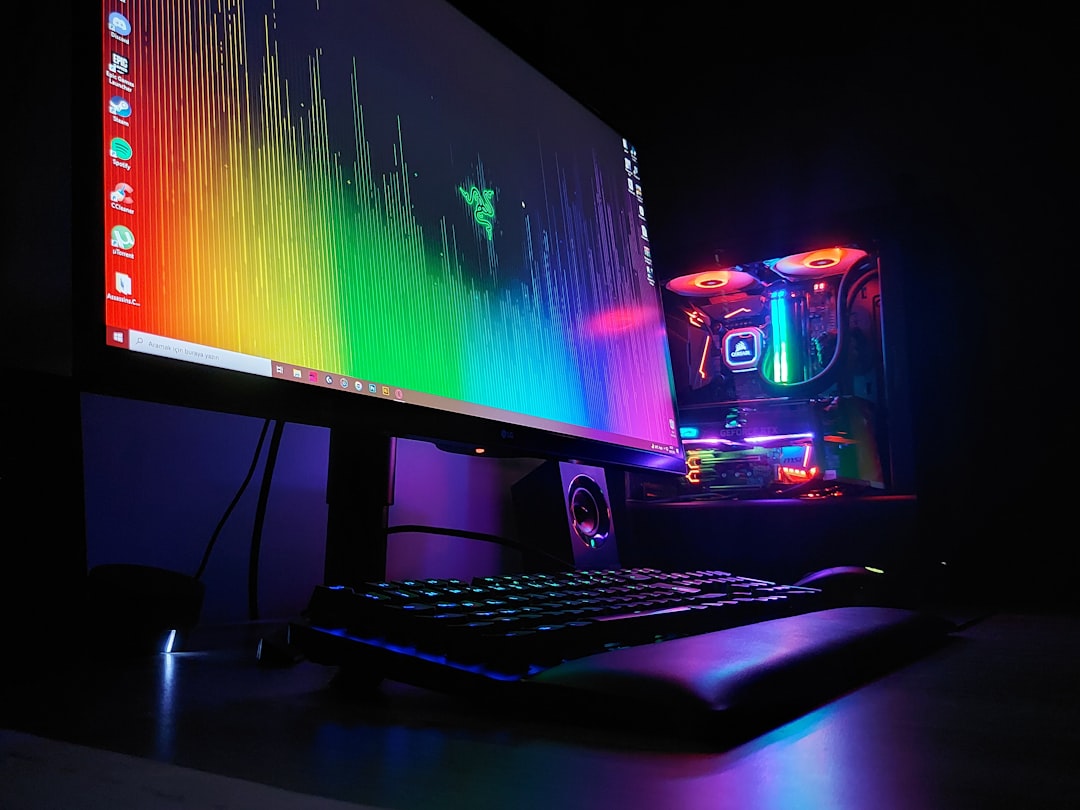
Choosing the right graphics processing unit (GPU) is crucial for any gamer looking to get the best performance and visual experience from their setup. With the two leading GPU manufacturers, NVIDIA and AMD, offering competitive products, understanding their differences can help you make an informed decision. This guide will break down the key features, performance, and value of NVIDIA's RTX series and AMD's Radeon lineup to help you select the best GPU for your gaming needs.
Overview of NVIDIA RTX Series: Key Features and Technologies
NVIDIA's RTX series has become synonymous with high-end gaming performance. These GPUs feature advanced technologies such as real-time ray tracing, which simulates realistic lighting, shadows, and reflections. Another standout feature is DLSS (Deep Learning Super Sampling), which uses AI to boost frame rates without compromising image quality. The RTX lineup ranges from budget-friendly options like the Asus NVIDIA GeForce RTX 4060 Graphic Card to powerhouse models like the ASUS ROG Astral GeForce RTX 5090 32GB GDDR7 OC Edition.
Overview of AMD Radeon Series: Key Features and Technologies
AMD's Radeon GPUs offer strong competition with a focus on raw performance and value. Their latest cards support ray tracing and feature FidelityFX Super Resolution (FSR), an upscaling technology that improves frame rates while maintaining visual fidelity. Radeon cards like the Sapphire AMD Radeon RX 7800 XT Graphic Card and the ASROCK AMD Radeon RX 9070 XT Steel Legend 16GB GDDR6 deliver excellent performance for gamers seeking alternatives to NVIDIA.
Performance Comparison: Benchmarks and Real-World Gaming Tests
When it comes to raw gaming performance, NVIDIA's RTX 40-series cards generally lead in high-end benchmarks, especially in ray-traced titles. For example, the TUF NVIDIA GeForce RTX 5070 Graphic Card and the Gigabyte NVIDIA GeForce RTX 5070 Ti Graphic Card handle demanding games at 1440p and 4K resolutions with ease. AMD's Radeon RX 7000 series, such as the Sapphire AMD Radeon RX 7900 XT Graphic Card, offers competitive frame rates and excels in traditional rasterization performance. Mid-range cards like the SAPPHIRE PULSE AMD Radeon RX 9060 XT 16GB GDDR6 Graphics Card provide solid 1080p and 1440p gaming experiences for budget-conscious players.
Ray Tracing and DLSS vs. FidelityFX: Visual Enhancements Explained
Ray tracing is a major visual improvement that adds realistic lighting effects to games. NVIDIA's RTX cards have been pioneers in this area, supported by DLSS technology that uses AI to maintain high frame rates even with ray tracing enabled. AMD's Radeon cards also support ray tracing, but their FidelityFX Super Resolution (FSR) is a more open and flexible upscaling solution that works on a wider range of hardware. While DLSS generally offers superior image quality and performance, FSR is rapidly improving and provides a great alternative for AMD users.
Pricing and Value: Which GPU Offers the Best Bang for Your Buck?
Pricing is a key factor for many gamers. NVIDIA's high-end cards like the EVGA GeForce RTX 3080 FTW3 ULTRA GAMING 10GB GDDR6X Graphics Card tend to be more expensive but offer cutting-edge features and performance. AMD's Radeon cards often provide better value at mid-range price points without sacrificing much performance. For example, the Gigabyte AMD Radeon RX 7600 XT Graphic Card is an affordable option that still delivers strong gaming results.
Power Consumption and Cooling: Efficiency Considerations
Power efficiency is important both for energy costs and system cooling. NVIDIA's latest RTX cards use advanced architectures that improve performance per watt, but higher-end models can still draw significant power and require robust cooling solutions. AMD's Radeon RX 7000 series also offers competitive efficiency, with some models running cooler and quieter depending on the manufacturer. When choosing a GPU, consider your PC case airflow and power supply capacity to ensure optimal operation.
Final Recommendations: Choosing the Best GPU Based on Your Gaming Needs
For gamers seeking the absolute best performance with advanced ray tracing and AI-enhanced visuals, NVIDIA's RTX 40-series cards like the ASUS ROG Astral GeForce RTX 5090 32GB GDDR7 OC Edition or the TUF NVIDIA GeForce RTX 5070 Graphic Card are excellent choices. If you want strong performance at a more affordable price with good ray tracing support, AMD’s Radeon RX 7000 series, such as the Sapphire AMD Radeon RX 7800 XT Graphic Card, is worth considering. For those building budget or mid-range rigs, options like the Graphics collection offer a wide selection of GPUs suited to all levels of gaming. Ultimately, your choice should balance performance, features, price, and power needs to match your gaming style and setup.
Published with Backlinker by Yassine Malti.
Partager:
How to Choose the Perfect iPhone Case for Your Model: A Simple Guide for Beginners
How to Choose the Right GPU for Your Gaming Setup in 2024: A Complete Buyer’s Guide